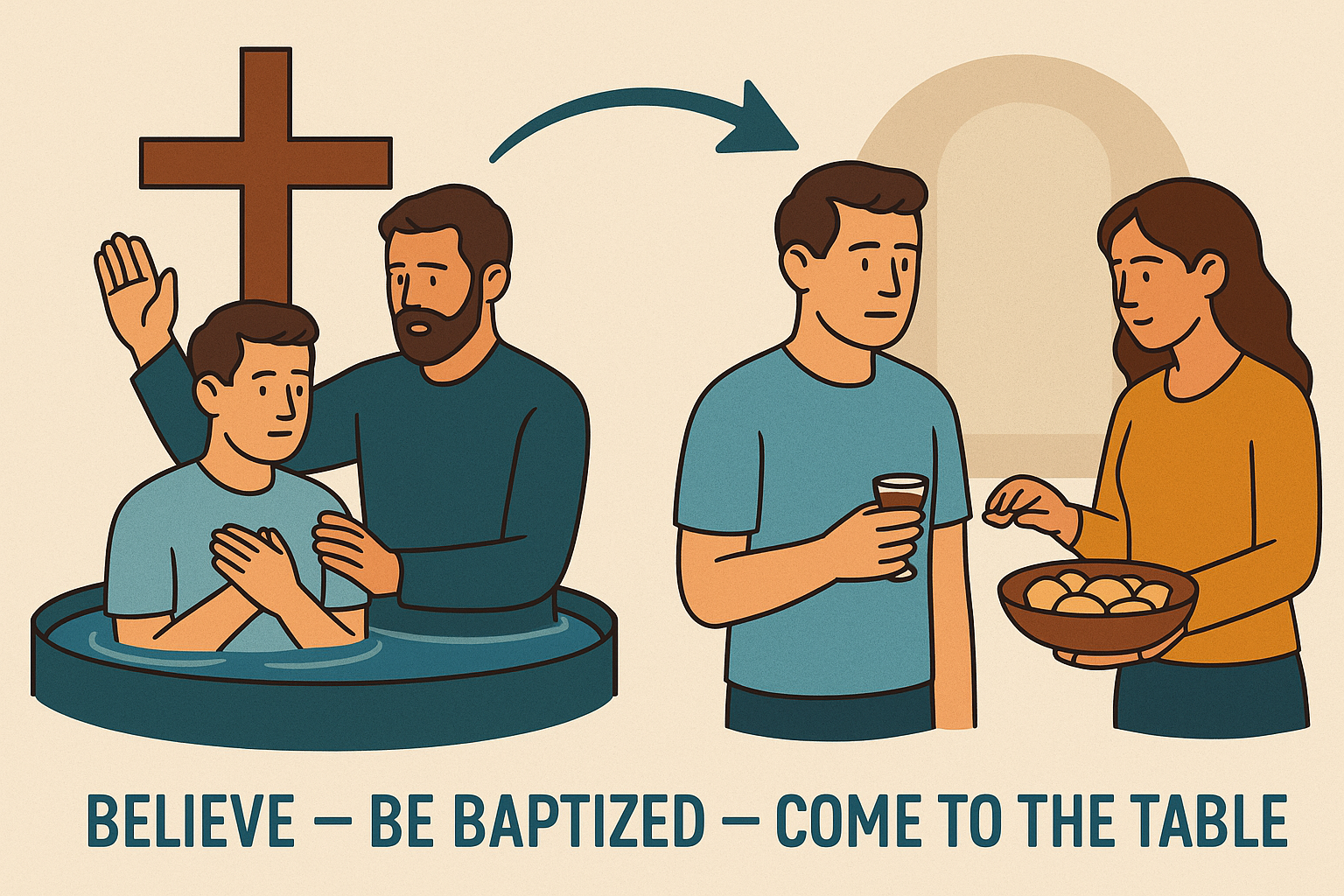
The Lord’s Supper is not a private devotional moment but the public act in which a church proclaims the Lord’s death until He comes. It presents the gospel in bread and cup: we do not save ourselves; Christ nourishes us. The question “May I partake if I’m not baptized?” deserves a biblical—not merely emotional—answer.
1) The biblical pattern: conversion → baptism → Table
In the New Testament, those who believe are baptized and then woven into the visible life of the church—teaching, fellowship, and “the breaking of bread.” That order is not incidental. Baptism is the doorway into the church’s visible fellowship; the Supper is the family meal of that fellowship. Baptism publicly confesses, “I belong to Christ and His people”; the Supper declares, “together we are one in Christ.” Skipping the door and heading straight to the meal weakens what the meal signifies: confessed union with Christ’s body.
2) What the Supper requires spiritually
The Supper is not for the flawless but for repentant sinners. It requires faith in Christ, honest repentance, self-examination, and a pursuit of reconciliation. To partake “in an unworthy manner” is not about earning merit; it’s about despising the meaning—taking the cup while hardening the heart, cherishing known sin, or trampling the church’s unity. Hence the ordinary practice is that those who have publicly confessed faith by baptism and walk humbly in the light receive the Supper.
3) “Unbaptized but believing”: what should you do now?
Scripture gives no ritual script to recite before distribution and no exhaustive list of exclusions. But its trajectory is clear: public confession (baptism) ordinarily precedes regular participation at the Table. Therefore, the wise and historic practice across many churches is: the Supper for baptized believers who live in repentance and peace with the church.
Common cases:
- New convert not yet baptized: move quickly toward baptism. Speak with the elders and set a date. During that short wait, some churches may invite you if your profession of faith is clear; others will ask you to wait until baptism. The right response is not to demand but to obey Jesus and advance toward baptism.
- Believer for years but never baptized: let the Supper press you. Christ commands baptism; don’t leave unfinished what Jesus made simple. The normal path to the Table passes through the water.
- Visitors from another church: if you are baptized, at peace with your church, and walking in repentance, you are generally welcomed. If you are under discipline or refusing a known sin, abstain and seek restoration.
4) Why this order protects the gospel
Baptism says publicly, “I died and rose with Christ”; the Supper says repeatedly, “I feed on Christ with His people.” To invert or sever these signs blurs the message. The Supper without baptism turns a covenant meal into a private experience; baptism without the Supper leaves a new believer isolated instead of rooted in a people. The biblical order keeps the gospel visible, the church identifiable, and pastoral discipline workable.
5) Conscience and the church’s authority
Conscience matters; so does the local church. Paul commands self-examination, yet he writes to a particular congregation that guards the Table and corrects abuses. The Supper is neither magic nor “every person for themselves.” To honor the Table is to honor the church that serves it, its shepherds, and the order Christ appointed. If you are not baptized, the simple way forward is to obey Jesus: pursue baptism, walk in the light, and then come with joy to the Table.
Conclusion: The healthy norm is that baptized, repentant believers at peace with the church share the Lord’s Supper. If you believe but are not baptized, don’t delay: obey Christ, receive baptism, then come to the Table with thanksgiving.
“Those who received his word were baptized… They devoted themselves… to the breaking of bread.” (Acts 2:41–42)
“Go therefore and make disciples of all nations, baptizing them…” (Matthew 28:19)
“Let a person examine himself… For anyone who eats and drinks without discerning the body eats and drinks judgment on himself.” (1 Corinthians 11:28–29)
“The cup of blessing… is it not a participation in the blood of Christ? … Because there is one bread, we who are many are one body.” (1 Corinthians 10:16–17