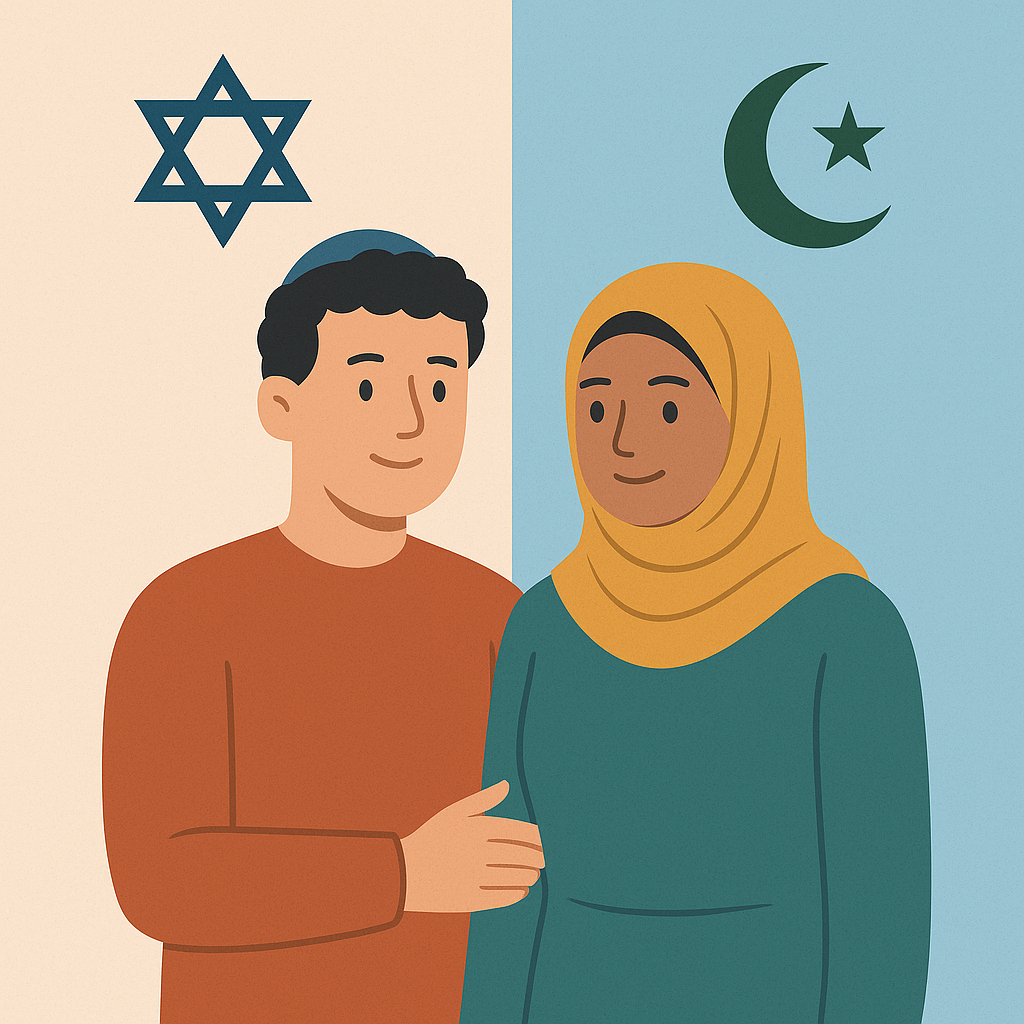
Judaism (halakha and contemporary practice)
Halakha (classical Jewish law)
No religious marriage with a non-Jew. In halakha, there is no qiddushin between a Jew and a non-Jew; therefore Orthodox/Conservative rabbis will not officiate. Usual sources: Deuteronomy 7:3–4, Ezra 9–10, Nehemiah 13, rabbinic law (e.g., Kiddushin 68b) and codification (Shulchan Aruch, Even HaEzer 16).
Children’s status: Jewish identity is matrilineal. If the mother is not Jewish, the child is not Jewish unless a formal conversion occurs.
Result: no ḥuppah (Jewish religious wedding). A civil marriage is possible but not religiously recognized by Orthodox/Conservative authorities.
Contemporary practice
Reform/Liberal movements: some congregations officiate interfaith weddings, sometimes with conditions (education plans, neutral ceremony, co-officiation). Not accepted in Orthodox/Conservative frameworks.
Home life: key issues (circumcision, kashrut, feasts, Hebrew education) must be spelled out in writing before engagement.
Islam (fiqh and realities)
Mainstream fiqh
Muslim man + Jewish/Christian woman: permitted with conditions of chastity and uprightness (Qur’an 5:5).
Muslim woman + non-Muslim man: prohibited by most schools (Qur’an 2:221, principle reflected in 60:10). Goals: preserve faith and household religious unity.
Children’s formation: often expected to be raised Muslim.
Current practice
Depending on country/family: civil marriage plus nikāḥ may be done if religious conditions are met (the Muslim-man case). For a Muslim woman, nikāḥ with a non-Muslim man is generally not validated.
Minority contemporary opinions exist but remain non-mainstream; consult a trusted local imam/council.
What this means for a Jewish–Muslim couple
1) Religious ceremony: halakhically no; fiqh yes only for “Muslim man + Jewish woman” (and even then, Judaism will not recognize it).
2) Civil recognition: often possible per national law; check locally.
3) Children: matrilineal status in Judaism; Islamic expectation of Muslim formation — a sensitive issue requiring a written agreement.
4) Home & rites: kashrut, halal, Shabbat/holy days, Ramadan/fasts — you need a precise domestic pact.
5) Families/communities: anticipate reactions on both sides; seek rabbinic and Islamic counsel if proceeding.
Three realistic paths
Civil wedding + household faith pact: civil marriage, then a written plan for kids, kitchen, calendar, rites; separate blessings (no joint religious rite).
Islamic ceremony (Muslim man + Jewish woman) + civil wedding: note Judaism’s non-recognition and likely family sensitivities.
Step back: if shared faith is non-negotiable for either side (or communities), better to decline than to live in chronic conflict.
Pre-decision checklist
Children (status/education/rites), kitchens (kashrut/halal/alcohol), calendar (Shabbat/Friday/feasts), worship places (synagogue/mosque), languages/schools, ceremony (who officiates?), religious recognition, families. Put it in writing and consult a rabbi + imam + local lawyer.