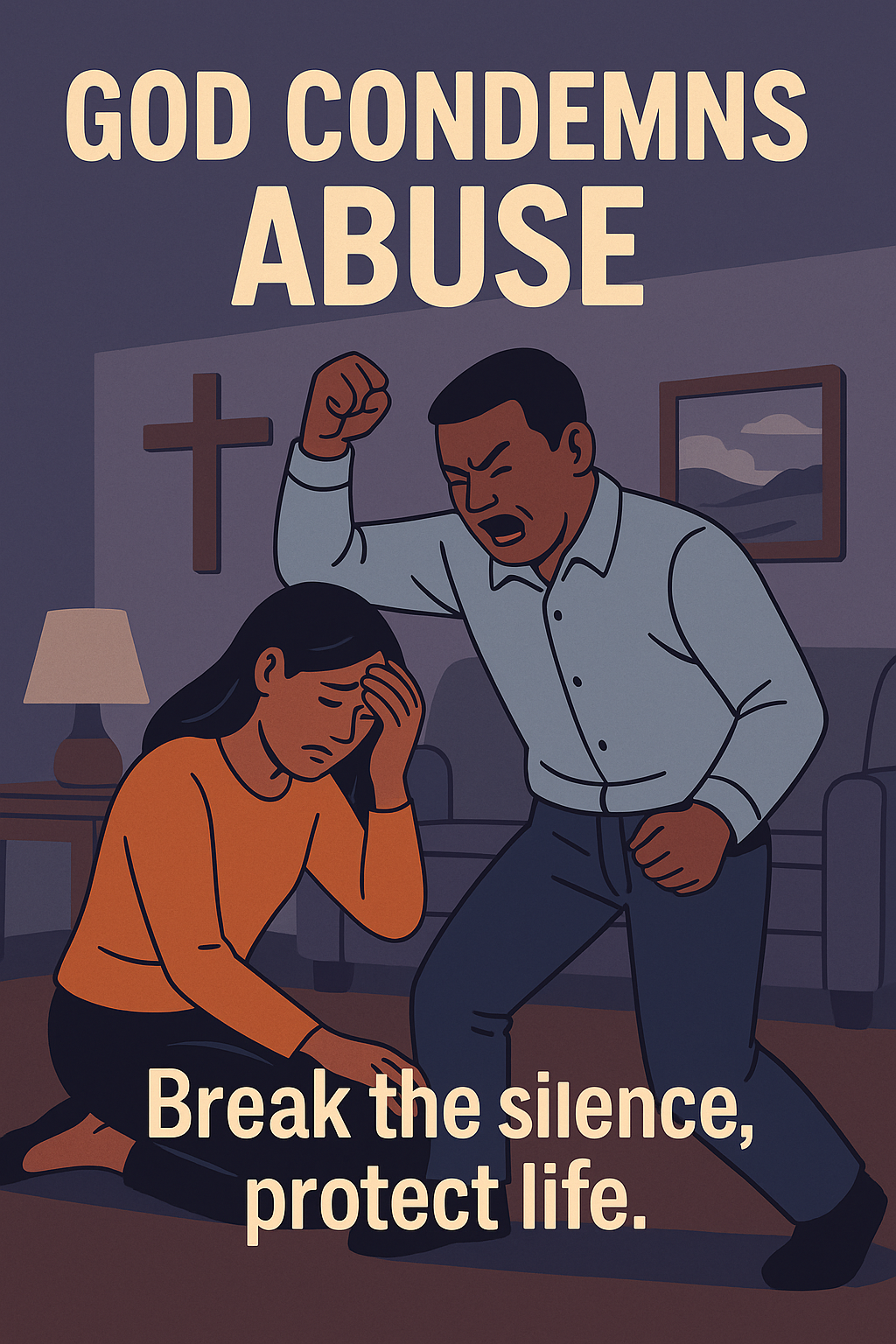
Abuse—physical, psychological, or emotional—is not a “conflict to manage” or a mere “temper issue.” It is a misuse of power that crushes God’s image in another person. The Bible never excuses brutality. It reveals a God who hates violence, lifts up the oppressed, and holds abusers to account. In a relationship, abuse overturns covenant: where love “protects,” abuse exposes; where love “honors,” abuse humiliates; where love “seeks the other’s good,” abuse seeks control. Naming it for what it is is not a lack of faith; it is fidelity to God.
Physical violence profanes the body God created and Christ redeems. Hitting, shoving, restraining, or intimidating with fists or objects is not a “moment of anger”; it is cruelty. Verbal and psychological violence—shouting, insults, threats, gaslighting, public shaming, punitive silence, controlling movements and money—destroys from the inside, isolates, and corrodes hope. Spiritual abuse adds a lie: using verses to silence the other, to justify control, to bless the unacceptable. God did not give Scripture as a weapon against the weaker but as a word to build up and protect.
The first biblical call in the face of abuse is protection. Wisdom does not expose you to danger “because you’re a Christian”; wisdom takes you to safety. In Scripture, fleeing evil, seeking help, and involving rightful authorities are acts of faithfulness. Your body is not a punching bag offered for someone else’s sanctification. If you are in danger, leave the place of danger, find a safe roof, contact trusted people, and reach out to civil authorities. God’s word does not ask you to die under blows; it commands you to choose life, for you and for your children.
The second call is truth. Abuse thrives in secrecy. Speaking to trustworthy church leaders, filing a report, documenting what happened, and clearly naming your experience is not slandering a reputation; it is saving a life and making real repentance possible if it is to come. Biblical forgiveness is neither amnesia nor an instant reset; it does not deny facts or bypass justice. Grace does not erase consequences: the perpetrator must be restrained, treated, and often penalized for their own good and the safety of others.
The third call is pastoral: the church must become a safe place. Honoring Christ at home means zero right to brutality. To love a spouse is to refuse to win by force, to practice withdrawal when anger rises, to submit to accountability with mature believers, and to seek competent professional help. Where abuse has occurred, “going back to normal” is not an option. When restoration is possible, it follows a long road: maintained protection, full truth, time, proof through repeated actions, and outside oversight. Where there is no fruit worthy of repentance, there is no resumption of shared life.
The fourth call is theological: God stands with the oppressed. Jesus did not flatten the weak to save the strong’s face; He broke yokes and set captives free. The cross does not teach victims to endure injustice without recourse; it displays the price God paid to overthrow injustice and birth a new humanity. If you have been abused, what happened to you is not “your fault” or “your cross to carry.” In Christ your dignity is non-negotiable; your boundaries are healthy; your safety is a priority. If you have committed abuse, the only road is un-defensive confession, acceptance of consequences, immediate cessation of all violence, submission to church and civil authorities, and deep therapeutic work on shame, anger, and the addiction to control.
A final word to the fearful: God sees, hears, and acts. You do not have to remain alone. Seek safe shelter today, alert a mature person, speak to authorities who protect. Faithfulness to God does not ask you to disappear; it invites you to live.
Verses
“The Lord tests the righteous, but His soul hates the wicked and the one who loves violence.” (Psalm 11:5)
“Husbands, live with your wives in an understanding way, showing honor… so that your prayers may not be hindered.” (1 Peter 3:7)
“Husbands, love your wives, as Christ loved the church… no one ever hated his own flesh, but nourishes and cherishes it.” (Ephesians 5:25, 29)
“Give justice to the weak and the fatherless; maintain the right of the afflicted and the destitute. Rescue the weak and the needy; deliver them from the hand of the wicked.” (Psalm 82:3–4)
If you or your children are in immediate danger, contact local emergency services and get to safety now.