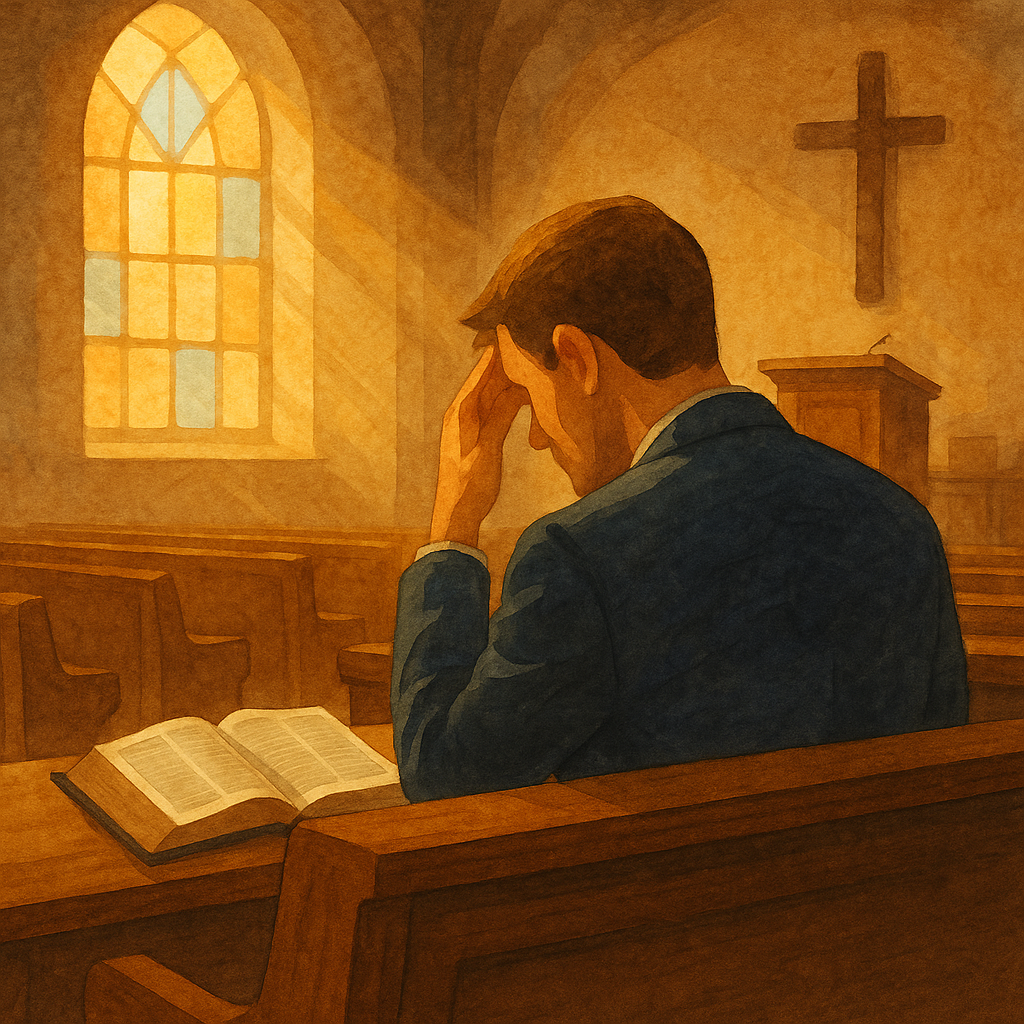
What God thinks about marriage and divorce (long and precise)
Marriage is a God-made covenant aimed at fidelity and unity. Jesus grounds it in creation and speaks without trimming the truth:
“Have you not read that he who created them from the beginning made them male and female, and said, ‘Therefore a man shall leave his father and his mother and hold fast to his wife, and the two shall become one flesh’? So they are no longer two but one flesh. What therefore God has joined together, let not man separate.… He said to them, Because of your hardness of heart Moses allowed you to divorce your wives, but from the beginning it was not so. And I say to you: whoever divorces his wife, except for sexual immorality (porneia), and marries another, commits adultery.” (Matthew 19:4-9, ESV)
The Lord also condemns treachery and the violence that often hides behind religious gestures:
“You cover the Lord’s altar with tears… And you say, ‘Why does he not?’ Because the Lord was witness between you and the wife of your youth, to whom you have been faithless, though she is your companion and your wife by covenant… For the man who does not love his wife but divorces her, says the Lord, covers his garment with violence… So guard yourselves in your spirit, and do not be faithless.” (Malachi 2:13-16, ESV)
And God sets high qualifications for overseers/pastors — not as flawless elites but as credible examples:
“The saying is trustworthy: If anyone aspires to the office of overseer, he desires a noble task. Therefore an overseer must be above reproach, the husband of one wife, sober-minded, self-controlled, respectable, hospitable, able to teach; not a drunkard, not violent but gentle, not quarrelsome, not a lover of money. He must manage his own household well, with all dignity keeping his children submissive, for if someone does not know how to manage his own household, how will he care for God’s church?… Moreover, he must be well thought of by outsiders.” (1 Timothy 3:1-7, ESV)
The precise question: may a divorced (non-adultery) pastor lead?
Short answer: Sometimes no, sometimes not now, sometimes yes — under strict conditions. Scripture gives criteria, not an automatic rule. Three lenses for the local church (elders/board):
1) The cause of divorce and truth before God
Potentially legitimate grounds (beyond adultery): abandonment by an unbeliever (cf. 1 Cor 7:15), violence/abuse (Mal 2:16 links divorce with violence). In such cases the victim may be innocent before God and people.
Major personal fault (chronic hardness, irresponsibility, untreated addiction, coercive control…): even without adultery, the person may have deeply violated covenant duties. Here, leadership is not appropriate until repentance is public, verifiable, and durable.
2) Are 1 Timothy 3 qualifications objectively restored?
Above reproach / good reputation: did the divorce create an enduring public scandal that makes credible leadership impossible in this context?
Household management: is the person now caring well for family (healthy co-parenting, provision, safety, truth)?
Maturity and sobriety: has there been time off, pastoral/clinical care, written recommendations, and accountability?
If not clearly positive, do not place in leadership (at least not now).
3) The church’s good (especially the “little ones”)
Even with real repentance, it may be wise to serve without leading, or in another place where history does not re-traumatize. Leadership is not a right; it is a burden for the flock’s good. Peace, clarity, and protection of the vulnerable come first.
Concrete scenarios (to avoid fuzziness)
Divorce after suffered abuse (no adultery): the faithful, protected party may serve; leadership may be reconsidered after healing, time, collegial discernment, and a solid public witness.
Divorce from one’s own hardness/immaturity: expect years off leadership, with a proven transformation path (therapy, mentors, accountability, fruit). Leadership is not guaranteed afterward.
Recent, contentious divorce: freeze leadership. Protect the church from competing narratives. Seek truth, not speed.
A process for wise discernment
1) Documented truth (timeline, owned responsibilities). 2) Safety (no ongoing abuse; parties protected). 3) Time (step out while clarifying). 4) Plural counsel (elders + outside oversight + clinical voices). 5) Written accountability (restoration plan or ineligibility). 6) Sober communication to the church (no sordid detail; enough clarity to guard peace).
Pastoral word
God honors covenant and heals the broken. He hates treacherous divorce and violence; He permits separation in narrow cases; He requires credible leaders. Some stories call for relinquishing leadership; others, after a long road, allow humble service (sometimes without leading). In all cases, truth, safety, and the flock’s good outrank ministerial ambition. To lead is to carry, not to self-vindicate.