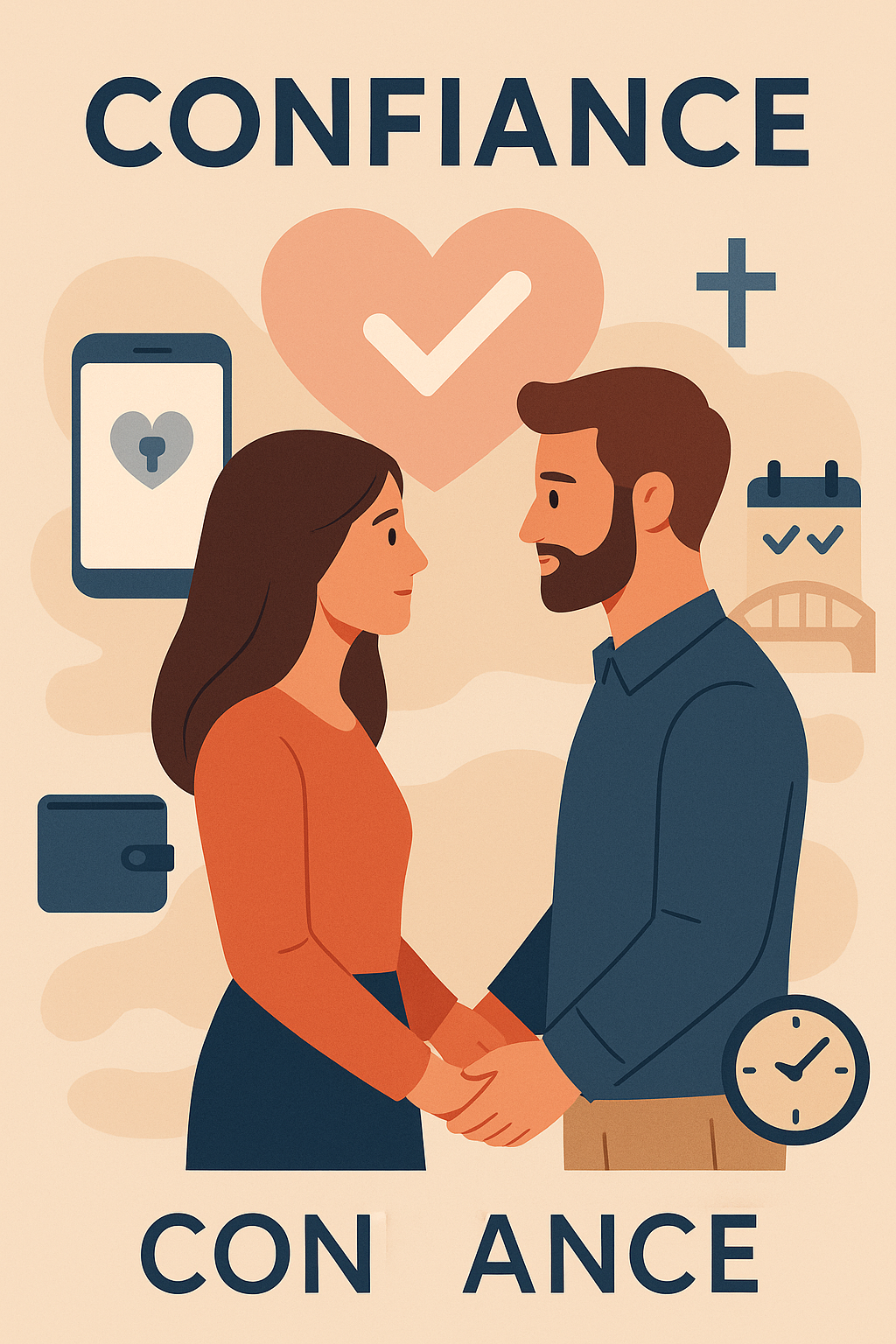
Trust isn’t a vague feeling; it’s a repeated choice. It grows when what I say matches what I do, day after day. It lives in the light: we tell the truth even when it costs, we keep promises even when inconvenient, and we keep God at the center because He sees what our partner can’t. Where trust lives, jealousy quiets, conversations simplify, and intimacy heals faster.
When trust is shaken, pretending won’t fix it. We name the wrong without excuses, open our books (time, money, sensitive messages), accept a season of extra transparency, and prove with steady actions that words are reliable again. Trust rarely returns in a moment, but it returns when truth becomes a habit and forgiveness a reflex. Biblical love chooses to believe the best without being naïve: it looks at facts but refuses to feed suspicion. Making trust a priority protects the bond before protecting the ego.