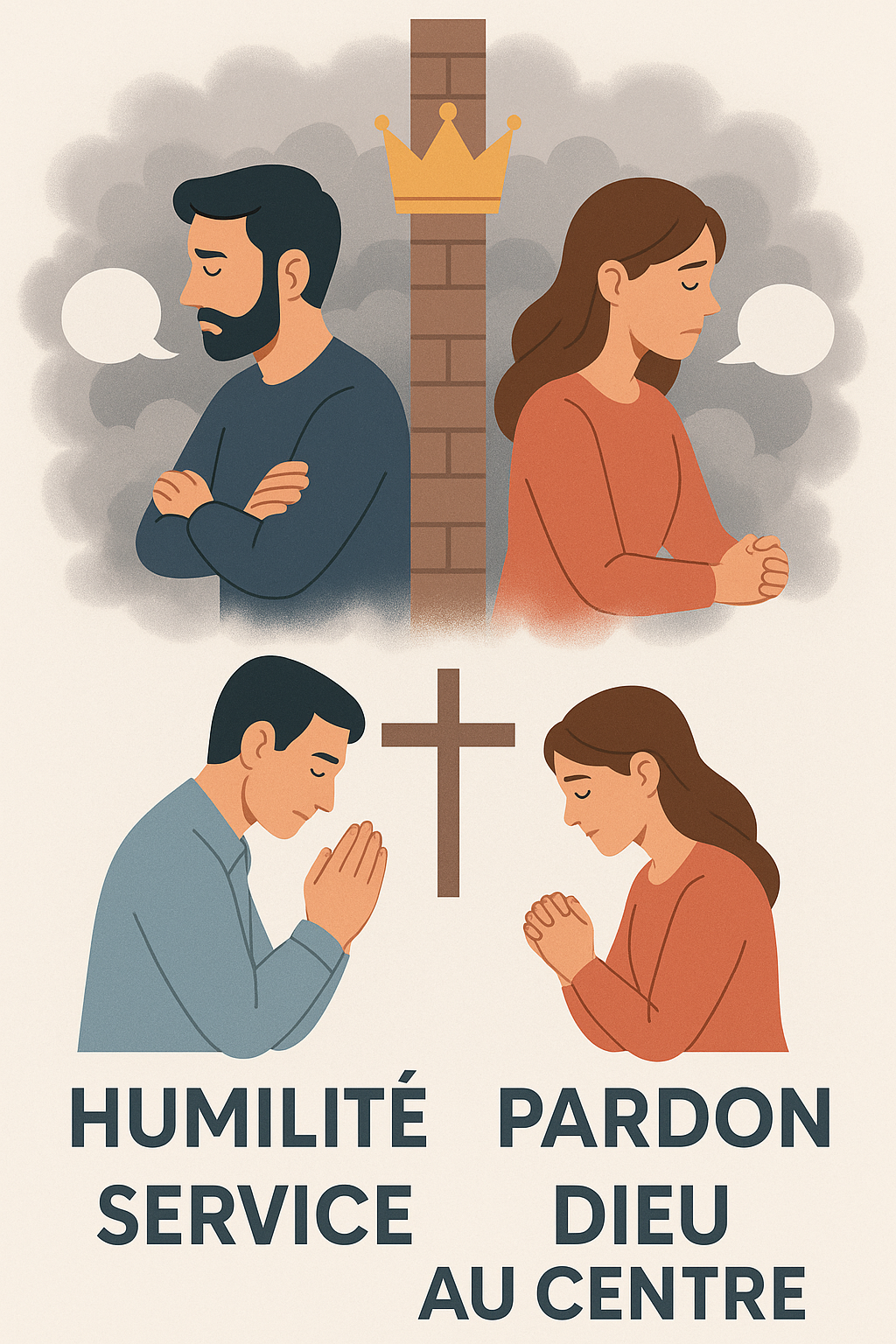
Pride rarely enters a relationship like a storm; it settles like fog until the other person disappears from view. It turns the question “How can I love you today?” into “How have you proved you deserve me?” Scripture doesn’t romanticize pride: “Pride goes before destruction, and a haughty spirit before a fall” (Proverbs 16:18). In a couple that fall begins with tiny habits: refusing to say “I was wrong,” correcting every detail to get the last word, leveraging silence as punishment, keeping a private ledger, curating perfection online while wounding in private.
In daily life, pride turns simple conversations into trials. We no longer listen to understand; we listen to reply. We start keeping archives—what I did, what you didn’t do, what you should have said. Even generosity becomes a tool of control: “I paid, so you owe me.” Pride also chokes spiritual intimacy. We pray less together because prayer requires admitting dependence. Yet the Bible is clear: “God opposes the proud but gives grace to the humble” (James 4:6). If God Himself stands against pride, no relationship can carry its weight.
Biblical love is not a feeling striving to win; it is a character choosing to die to self. “Love is patient and kind; love does not envy or boast; it is not arrogant… it does not insist on its own way” (1 Corinthians 13:4–5). A house cracks when each spouse protects an image instead of the bond. In real life that looks like leaving a message unanswered out of pride, sleeping back-to-back, hiding financial stress “so you won’t worry,” or letting “I deserve better” become a permission slip to break what’s sacred.
Healing a pride-sick relationship doesn’t come through a grand speech but through precise, repeated acts. First, name your sin without excuses: “I was harsh; you were hurt; that’s on me.” Second, act as if the other matters more than your image: wash the dishes when you planned to rest, send the message you don’t feel like sending, delay a purchase to preserve peace. Third, take a step that is spiritual and practical at once: pray together even when upset and ask God for the grace of humility. Paul maps the way: “Do nothing from selfish ambition or conceit, but in humility count others more significant than yourselves. Let each of you look not only to his own interests, but also to the interests of others” (Philippians 2:3–4).
Here is what changes in ordinary life. On the night tension rises, the strongest person isn’t the one who is right but the one who opens the door of the heart: “I want to understand you. Tell me where I hurt you.” The next morning humility sets a simple rhythm: a specific “thank you,” a quick “sorry” before leaving if anything feels off, a message midday to reassure. At week’s end, take ten minutes to answer two questions: what made you feel loved, and what weighed on you? These aren’t magic techniques; they are the Gospel teaching us to love as we have been loved.
Pride kills; humility resurrects. If your relationship is running out of breath, start small today: own your part, ask forgiveness quickly, serve without announcing it, and pray together. God does not resist such hearts. He gives grace—and with grace, a future.